Cambodia Travel Guide
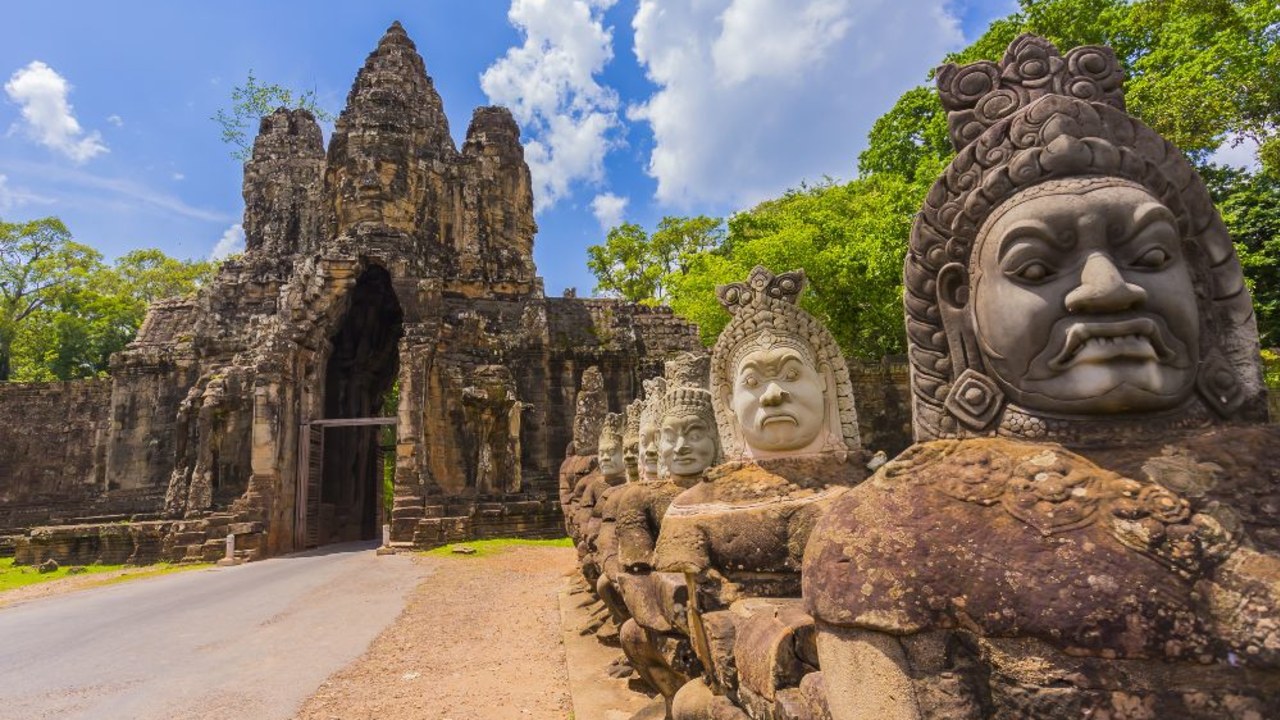
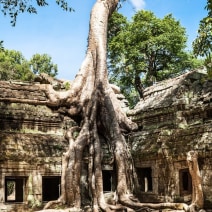
Cambodia is a country of ancient temples, rich culture, and inspiring history. Famous for the awe-inspiring Angkor Wat, the largest religious monument in the world, Cambodia offers a unique experience for travellers seeking adventure and insight into a deep and storied past.
With a population of over 16 million people, Cambodia is home to a diverse mix of ethnicities, and Khmer is the official language. The capital city, Phnom Penh, is a bustling hub of culture and history, while Siem Reap provides access to the iconic Angkor Archaeological Park.
Emerging from its troubled past, Cambodia has become a resilient and welcoming country, offering visitors everything from serene river cruises along the Mekong to exploring lush jungles and discovering its vibrant local traditions.
We've outlined some general information that may be helpful to you when planning your next holiday to Cambodia.

Time Zone & Currency
Cambodia is seven hours ahead of Greenwich Mean Time (GMT) throughout the year. The currency is the Cambodian Riel (KHR), although US dollars are widely accepted.

Weather in Cambodia
Cambodia has a tropical climate with a rainy season (May to October) and a dry season (November to April). Temperatures remain consistently warm throughout the year, averaging between 25°C to 35°C.

Reading For Your Trip To Cambodia
The Killing Fields by Christopher Hudson
The Quiet American by Graham Greene
The Golden Age of Angkor by Vann Phan
Best time to go to Cambodia
Cambodia can be visited year-round, as it stays consistently warm, but the best time is from November to April, when rainfall is at its lowest.
Top Tourist Attractions In Cambodia
Food and drink in Cambodia
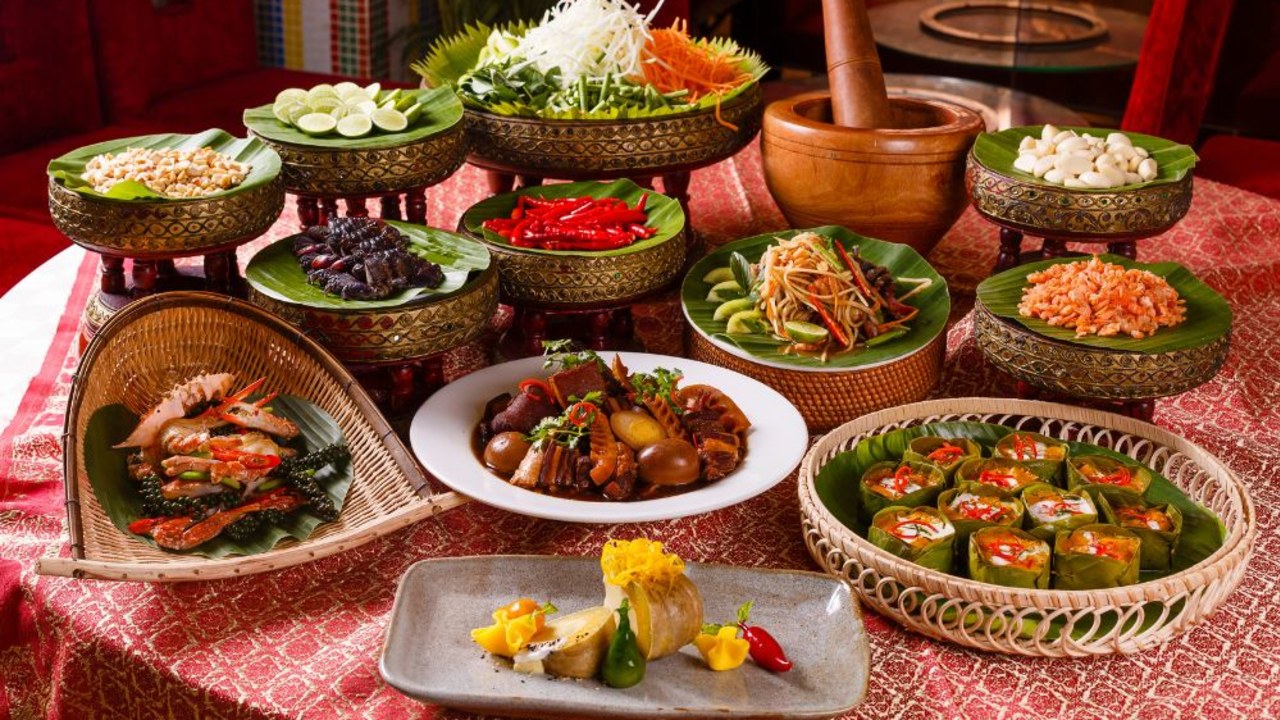
Cambodian cuisine is a wonderful blend of fresh ingredients, herbs, and influences from neighbouring countries such as Thailand, Vietnam, and China. Some must-try dishes include:
- Amok: A traditional Cambodian dish made with fish, chicken, or tofu, cooked in a rich coconut milk and curry paste sauce, often steamed in banana leaves.
- Bai Sach Chrouk: A popular breakfast dish of grilled pork served with rice, often accompanied by pickled vegetables and a fried egg.
- Lok Lak: A stir-fried beef dish typically served with rice and a dipping sauce made from lime, pepper, and salt.
- Nom Banh Chok: A famous Cambodian noodle dish, featuring rice noodles served with a fragrant, herbal fish broth, and topped with fresh vegetables and herbs.
- Khmer Red Curry: A milder version of curry compared to other Southeast Asian varieties, made with beef, chicken, or fish, vegetables, and coconut milk.
Cambodia also offers a wide range of beverages, with Tamarind juice, Sugar Palm juice, and Coconut water being popular choices to quench your thirst. The country is also known for Cambodian beer, with local brands such as Angkor and Cambodia beer.
Cambodia Travel Guide FAQs
Can you give a brief history of Cambodia?

Cambodia has a rich history shaped by its ancient civilisation and struggles for independence. Originally home to the Khmer Empire, which flourished from the 9th to the 15th centuries, Cambodia was renowned for its grand architecture, most notably the iconic temples of Angkor. After the fall of the Khmer Empire, Cambodia was influenced by Thailand and Vietnam, and it faced periods of territorial conflict and foreign domination.
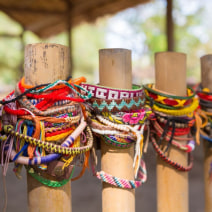
In the 19th and early 20th centuries, Cambodia became a French protectorate. Following independence from France in 1953, the country struggled with internal instability and political challenges. The Khmer Rouge regime, led by Pol Pot from 1975 to 1979, led to one of the darkest periods in Cambodian history, with an estimated 1.7 million people killed in the genocide. After the fall of the Khmer Rouge, Cambodia slowly recovered, and in 1993, a UN-backed peace agreement led to the establishment of a constitutional monarchy.
Today, Cambodia is a resilient and thriving nation, proud of its rich cultural heritage, rapidly growing economy, and the enduring spirit of its people, making it a dynamic and welcoming destination for travellers.
Is Cambodia safe?
The Cambodian people are famed for their welcoming nature and their friendliness. The places included in your itinerary are generally safe, and our guides will always look out for you. However, as with any large or popular destination, opportunists and pickpockets can occasionally be a concern, particularly in busy tourist areas. It’s advisable to stay vigilant and take good care of your personal belongings at all times.
Do I need a holiday visa to Cambodia?
From 1st July 2024, Cambodia has introduced an e-arrival card to streamline the entry process into the country. This digital card replaces the traditional paper immigration form, health declaration, and customs form, providing a convenient all-in-one platform for arrival details. All travellers must complete the e-arrival card within seven days before their arrival. The application form is available on the official website: www.arrival.gov.kh
Are vaccinations for Cambodia required?
Vaccinations are not essential for your itinerary with Travel Department. However, prior to travel we recommend seeking a qualified medical practitioner’s advice about vaccinations and up to date precautionary medicine for your trip to Cambodia.
What clothes should I pack for visiting Cambodia?
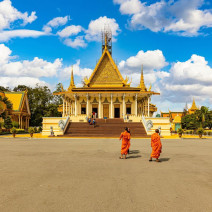
Due to Cambodia’s tropical climate, we recommend light cotton clothing to remain comfortable whilst exploring during the day. It is advisable to cover arms and legs in the evenings to protect against mosquito bites. An umbrella is a good idea in both the hot and rainy seasons as it will offer protection from the strong sun and the tropical downpours. When visiting temples and palaces, modest dress is required, with shoulders and knees covered.
Are there customs, traditions or etiquette in Cambodia I should be aware of?
- Ask for permission before taking photographs of Cambodian people or monks
- It is customary to remove your shoes when entering a place of worship such as a pagoda or a temple, as well as someone’s home.
- Tourists should respect a dress code to enter temples and palaces which are sacred places. Visitors should not wear the following when entering these places:
- Sleeveless shirts/ sportswear
- Tights or leggings
- Shorts or short skirts
- Three-quarter length trousers
- Flip flops or sandals without a strap behind the heel
- Swimwear or beachwear
- Shirts with offensive words or images.
- Though not always expected, a respectful way of greeting another individual is to bow the head slightly with hands pressed together at the chest (known as the sampeah)
- Don't use your feet to point at someone, as in Cambodian culture the feet are considered the lowest and least sacred part of the body. Pointing your feet at a person or a religious object is seen as highly disrespectful and offensive.
- Don't touch a Cambodian person on the head, as in Cambodian culture the head is considered the most sacred part of the body and the seat of the soul. Touching someone's head, even as a friendly gesture, is seen as deeply disrespectful and offensive.
- Women should never touch male monks or hand something directly to them, as physical contact between women and monks is strictly forbidden in Cambodian Buddhist tradition.
Is it okay to haggle when shopping in the markets in Cambodia?
Yes! Haggling is expected and part of everyday life in Cambodia. A smile goes a long way. Start by offering about a third of the asking price and negotiate from there. The markets are great for unique items such as silks, woodcarvings, rattan weavings and the krama, the traditional Cambodian scarf. Similar to a sarong, the krama is versatile and can be used for bathing, cleaning or sun protection. Both Phnom Penh and Siem Reap are filled with bustling local markets to explore.
Can I drink the tap water in Cambodia?
It is not safe to drink tap water but purified bottled mineral water is available everywhere. Hotels usually provide a complimentary bottle of local mineral water per person in the room. Ice cubes in drinks are generally okay in good standard hotels and restaurants, but it is best to avoid them on street stalls or in the countryside. Some minor stomach problems are always possible when travelling to exotic countries, so bring a supply of your usual anti-diarrhoea medicine.
What should I know about public toilets in Cambodia?
Cambodians are very concerned with paper waste. Most of the public toilets do not provide toilet paper they use. Instead of using toilet tissue, locals may use the ‘hand-and-water’ technique, which involves washing with water and the left hand. We recommend you carry your own toilet tissue and hand sanitiser.
Cambodia Travel Advice
- For up-to-date information regarding entry into Cambodia please see: www.gov.uk
- Official Cambodia Tourism Board: www.tourismcambodia.com